
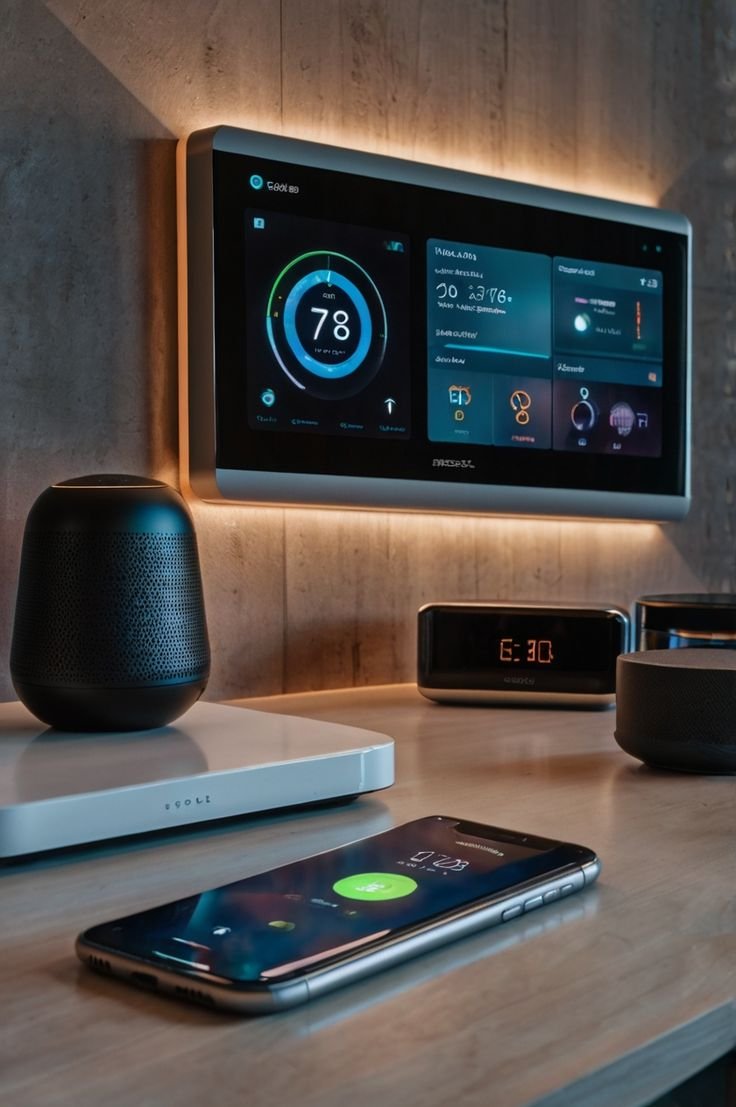
Smart homes are no longer just about controlling lights or playing music. In 2025, the smart home ecosystem has evolved into something far more powerful — AI-driven, deeply interconnected, and focused on wellbeing, security, and energy efficiency. Whether it’s robots that roam your house, locks that sense you’re coming, or displays that act as command centers, this year brings smart home devices that truly feel like the future is here.
Here are some of the most exciting smart home devices and trends to consider if you want to upgrade your space this year.
1. Home Companion Robots & AI Assistants
Samsung Ballie — Your Rolling AI Companion
One of the most futuristic smart home devices expected in 2025 is Samsung’s Ballie. This small, autonomous robot can follow you around your home, control smart devices via SmartThings, make video calls, and even project things on walls or floors. Wikipedia+2Bernard Marr+2
- Why It Matters: Unlike traditional smart speakers or hubs, Ballie physically moves through your space. It can check on rooms, interact with your devices, and act as a mobile presence. Bernard Marr
- Real-World Uses: Imagine Ballie greeting you when you come home, turning on lights, or reminding you of your schedule — essentially, a tiny digital butler.
2. Smarter Climate Control
AI-Powered Smart Thermostats
Modern smart thermostats are no longer just programmable — they learn. According to smart-home trend reports, devices in 2025 use generative AI, occupancy data, and weather forecast integration to optimize temperature and energy usage. Voxilens
Key Features:
- Predictive temperature control based on your daily habits idnlook.com
- Integration with other smart home systems (e.g., smart fans, HVAC, even solar) idnlook.com
- Geofencing — they know when you leave or return and adjust accordingly. idnlook.com
This means better comfort and potentially lower energy bills without manual tweaking.
3. Next‑Gen Smart Displays / Hubs
Smart displays are evolving into central control hubs for your entire smart home ecosystem.
- AI-Enhanced Control: These displays aren’t just for watching videos — they now use generative AI to suggest routines, plan your day, or remind you of tasks. Voxilens
- Family Dashboards: Larger wall-mounted displays (like Amazon’s Echo Show 15) can show calendars, notes, and feed live camera feeds — essentially acting as a home command center. CHERIYRE+1
- Seamless Integration: They connect to your lights, thermostat, locks, and other smart devices, giving you unified control from one place.
4. AI‑Enhanced Cleaning Robots
Robotic vacuums and mops are now more autonomous, efficient, and intelligent than ever before.
- Obstacle Avoidance & AI Mapping: Newer models learn your home layout, avoid small objects (like cables or toys), and adapt cleaning paths accordingly. sascosmarthome.com
- Self‑Maintaining Docks: Some robots now dock into stations that empty dustbins or wash mop pads, reducing how often you have to intervene. Voxilens+1
- Roborock & More: High-end models combine vacuuming and mopping with strong AI navigation, making them a compelling pick for 2025. sascosmarthome.com
These cleaning robots let you automate one of the most tedious household chores.
5. Smart Security: Cameras, Locks & AI Surveillance
AI Security Cameras
Security cameras in 2025 are smarter and more privacy aware:
- On-Device AI: Instead of sending raw video to the cloud, many cameras now use on-device AI to identify people, pets, or threats — reducing false alerts. Voxilens
- Behavioral Alerts: Cameras can differentiate between a family member, a delivery person, or a potential intruder, and send contextual alerts. Map Homes
Smart Locks with UWB Technology
Ultra-Wideband (UWB) is making smart locks more intuitive and secure:
- Proximity Unlocking: UWB-enabled locks can detect when your smartphone or wearable device is nearby and unlock automatically. thewebhunting.com+1
- Multiple Access Methods: Modern locks combine UWB with fingerprint, passcodes, or even vein mapping for advanced security. Bernard Marr
These combined security devices offer both convenience and top-tier protection.
6. AI‑Powered Smart Lighting
Lighting is no longer just functional — it’s smart, adaptive, and mood-aware.
- Adaptive Scenes: Smart lights learn your routines and can change color or brightness depending on time of day, your activity, or even the weather. trendsplace.tech
- Circadian Lighting: Newer systems mimic natural light to help regulate sleep, energy, and mood. CHERIYRE
- Voice & Gesture Control: Some setups allow you to control lights with hand gestures or voice commands, making it more intuitive and hands-free. Simplify Home Tech
Smart lighting is one of the most visible upgrades in a modern smart home, but it’s also deeply functional.
7. Smart Home Health & Wellness Gadgets
Smart devices are increasingly focused on well-being, not just convenience.
- Air Quality Monitors: Integrated sensors now measure indoor pollutants, humidity, and VOCs, and connect to smart HVAC systems to automatically purify air. (Trend highlight) idnlook.com
- Gesture‑Control Lamps: Some smart lamps use motion and gestures to turn on/off, and can also detect falls for senior care. Simplify Home Tech
- AI Pet Cameras & Robots: Devices like pet robot cams not only monitor your pets but also interact with them, dispense treats, and act as remote companions. Map Homes
These devices make your smart home not just smarter, but more caring.
8. Smart Appliances & Kitchen Upgrades
The kitchen and laundry room are also getting smarter in 2025.
- AI Fridges: Refrigerators can now monitor food inventory, suggest recipes, and even reorder groceries. idnlook.com
- Infrared Smart Ovens: New smart ovens use infrared technology to cook faster and more evenly, while offering remote control via apps. Simplify Home Tech
- Whole-Home Automation Kits: Entry-level kits from local brands now let you automate lights, plugs, and other devices seamlessly, even without professional installation. CHERIYRE
These smart appliances combine convenience with real energy and time savings.
9. Smart Retro & Aesthetic Gadgets
Not all smart devices need to look futuristic — 2025 also emphasizes style.
- Retro Smart Clocks & Displays: Devices like vintage-inspired displays or framed smart TVs blend with decor while offering modern smart features. trendsplace.tech
- Smart Blinds: Motorized blinds, often styled in a classic way, can be controlled via app or voice, automatically adjusting to sunlight or your schedule. (Smart home trend) WebTrends
These are perfect if you want your smart home to feel elegant, not techy.
10. The Matter Revolution & Unified Smart Homes
One of the biggest tech shifts in smart homes this year is Matter compatibility.
- Unified Protocol: Matter makes it possible for devices from different brands to communicate seamlessly. Voxilens+1
- Future-Proofing: As more devices adopt Matter, you can build a more flexible and interoperable smart home without being locked into one ecosystem. Simplify Home Tech
- Simpler Automation: With a unified system, you can more easily create automations across brands — like linking lights, thermostat, and security based on one routine.
🔎 Real Product Examples to Consider
Here are some actual devices worth checking out in 2025 to build or upgrade your smart home:
- Smarteefi 5‑Port Wi‑Fi Smart Switch Board: Lets you automate multiple mains-powered appliances or lights; works with Alexa and schedules.
- Oakter Oak Plug Plus Wi‑Fi Smart Plug: A small, efficient smart plug — great for lamps or appliances, controlled via app or voice.
- Smart Plug VP5X (Alexa & HomeKit): Certified for use with both Alexa and Apple HomeKit, gives you flexibility in choosing your ecosystem.
- Dreame L10 Prime Robot Vacuum & Mop: Advanced cleaning robot with self-cleaning dock, room mapping, and obstacle avoidance.
Why These Devices Are Worth It in 2025
- Real Intelligence: These devices don’t just respond — they learn. From adjusting the thermostat to suggesting routines, AI is making smart homes smarter.
- Energy Efficiency: With predictive control and automation, you can save on power bills while maintaining comfort.
- Better Security: AI-enabled cameras and smart locks reduce false alerts and provide smarter, more reliable protection.
- True Automation: With standards like Matter, automation becomes more seamless — no more juggling incompatible brands.
- Wellness Focus: Devices are not just about convenience — many now monitor air quality, interact with pets, or provide health-friendly lighting.
How to Build or Upgrade Your Smart Home Wisely
- Start Small: Begin with a couple of “smart anchor” devices (like a thermostat or smart plug) and build gradually.
- Check Compatibility: Make sure new devices support the smart ecosystem you use (Matter, Alexa, Google Home, etc.).
- Use Automations: Set up routines for lighting, heating, or security rather than just controlling devices manually.
- Optimize Privacy: Use devices with on-device AI processing (e.g., security cameras) to reduce reliance on cloud services.
- Plan for the Future: Buy devices that are Matter-compatible or support firmware updates — so your smart home stays up to date.
Final Thoughts
Smart home technology in 2025 isn’t just about gimmicks — it’s becoming deeply practical, intelligent, and focused on quality of life. From companion robots like Samsung Ballie to self-mapping robot vacuums, AI security, and smart appliances, the devices you bring into your home this year can truly upgrade your daily life.
Whether your goal is greater convenience, better energy use, improved security, or simply a more futuristic home, these next-gen smart devices make modern living feel smoother, smarter, and more connected than ever.
